Who Pays for Commercial Water Damage in Modesto, Tenant or Landlord?
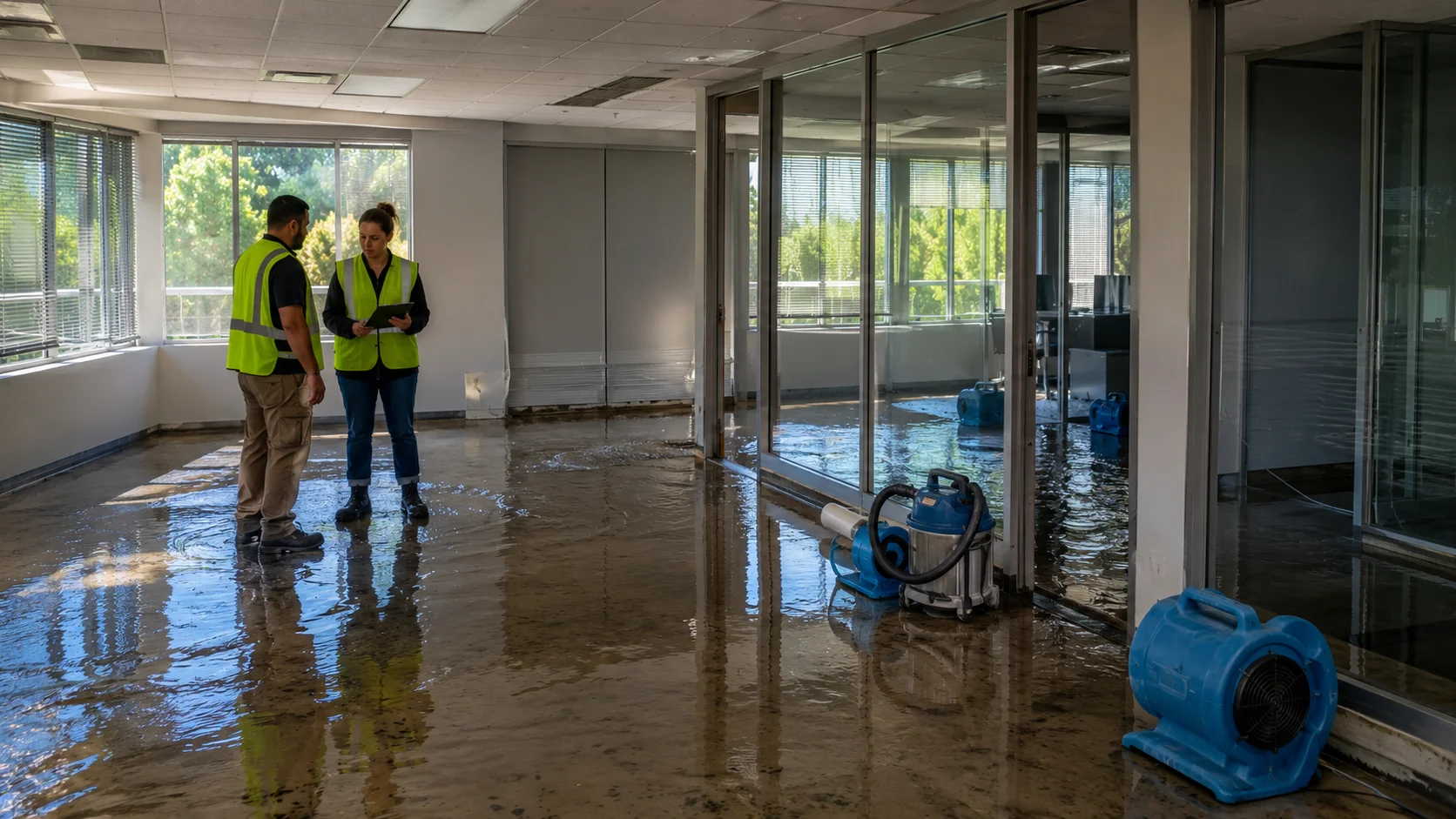
When commercial water damage Modesto property owners and tenants discover a flooded suite, a burst pipe, or a slow leak behind a wall, the first question is almost always the same: who is responsible for paying to fix it? The answer matters because every hour of delay raises the cost, and because responsibility is split differently depending on the lease, the source of the water, and what was actually damaged. For commercial property owners, property managers, and the businesses that lease from them across the Central Valley, understanding how responsibility is divided is the difference between a fast, organised response and a drawn out dispute.
RedTag Property Mitigation works with commercial owners, property management companies, and insurance adjusters throughout Modesto and the surrounding area, and we see the same confusion repeatedly. This guide explains the general rules for who pays after commercial water damage Modesto businesses experience, why the lease is the deciding document, how the source of the water changes everything, and what both sides should do immediately to protect the building and any future insurance claim.
The Lease Is the Rulebook for Commercial Water Damage
Unlike residential tenancies, which are governed heavily by statute, commercial leases rely far more on the contract language the two parties signed. That means the lease itself is usually the first place to look when commercial water damage Modesto disputes arise. The structure of the lease often decides who carries responsibility for the building, the interior, and ongoing maintenance.
The general division most commercial leases follow looks like this, although the exact wording always controls. Knowing this split is the first step in resolving any commercial water damage Modesto dispute.
• Structural elements, the roof, exterior walls, and systems inside the walls are typically the landlord's responsibility to repair.
• Tenant owned property such as equipment, inventory, furniture, and signage is generally the tenant's responsibility to replace.
• Triple net, gross, and modified gross leases each divide maintenance and operating costs differently, so the lease type shapes who pays for what.
• Damage caused by tenant negligence, such as an overflowing appliance the tenant installed, can shift responsibility back to the tenant.
Because the lease is the deciding document, both owners and tenants benefit from understanding lease structures before a loss occurs. The U.S. Small Business Administration provides general guidance for businesses on how leasing space works, which helps tenants understand the kind of obligations a commercial lease can contain. The practical takeaway is simple: read the maintenance, repair, and casualty clauses before an emergency, not during one.
How the Source of the Water Changes Who Pays
Responsibility does not depend only on the lease. It also depends on where the water came from. A roof leak, a municipal water main break, a burst pipe inside a shared wall, and a tenant's failed dishwasher are four very different situations, and each points responsibility in a different direction. This is why documenting the source immediately is so important after commercial water damage Modesto businesses experience. The source often decides not just who pays, but whether insurance pays at all.
Insurance adds another layer. Many commercial property policies cover sudden and accidental water events while excluding gradual leaks that are treated as a maintenance failure. That distinction, sudden versus gradual, frequently decides whether a claim is paid. Identifying and recording the true source of click here the water early protects whichever party ends up filing. Fast professional
emergency water extraction stops the loss from growing while the source question is sorted out, and accurate moisture mapping and thermal imaging can reveal whether water has tracked into wall cavities or subfloors far from where it first appeared.
Why Speed Protects Both Parties After Commercial Water Damage
No matter who ultimately pays, both the landlord and the tenant share one urgent interest: stopping the damage from spreading. Water does not wait for a responsibility decision. The longer materials stay wet, the more the loss grows and the more likely a secondary problem becomes. The EPA water damage and mold prevention guidelines advise that wet materials should be dried within 24 to 48 hours to prevent mold growth, and the EPA mold course on drying water damaged materials explains that in most cases mold will not grow if damp items are dried within that window.
That 24 to 48 hour window is the single most important fact for both sides to understand. With commercial water damage Modesto owners cannot afford to wait, because delay is what turns a manageable water event into a mold remediation project, a structural problem, and a far larger bill. Professional structural drying using commercial air movers and dehumidifiers dries a building far faster than waiting for it to dry on its own. When materials cannot be saved, controlled flood cuts and drywall removal removes the wet material before it becomes a mold source, and antimicrobial and antibacterial treatment helps protect the framing that remains.
Acting quickly also protects both parties legally. The EPA guide to mold remediation in commercial buildings notes that even materials dried within 48 hours may already show growth, which is why prompt, documented mitigation matters for everyone involved. A landlord or tenant who delays can be held responsible for the additional damage that delay caused.
Documentation: The Step That Decides the Claim
Whoever ends up filing the insurance claim, the outcome usually comes down to documentation. The party that recorded the damage thoroughly, from the first hour, is the party whose claim moves smoothly. Guidance from FEMA on the information needed to file an insurance claim stresses documenting the date, time, cause, and a detailed description of the damage, along with photographs and videos inside and out. FEMA also emphasises that insurance documentation is a critical part of any recovery process.
For commercial losses, the documentation should be insurance grade from the start. After commercial water damage Modesto businesses face, that includes timestamped photos, moisture readings, equipment placement records, and a clear record of the suspected source. RedTag provides water damage insurance documentation built for adjusters, so the paperwork supports the claim rather than slowing it down. Good documentation is what separates a paid claim from a denied one, and it is the one thing both landlords and tenants should insist on regardless of who is ultimately responsible.
Areas We Serve Across Modesto and the Central Valley
RedTag Property Mitigation responds to commercial water damage Modesto businesses and across the wider region. Service areas include Downtown Modesto, Sylvan, Beyer Park, College Area, Lakewood, Village One, and the Airport District, along with Salida, Riverdale Park, Ceres, Turlock, Denair, Keyes, and Hughson. Coverage extends to North Stockton, Lincoln Village, Tracy, Mountain House, Lathrop, and Manteca, as well as the Merced and Fresno corridor including Merced, Atwater, Livingston, and Madera. Property managers with multiple sites across the Central Valley can arrange coordinated emergency response across their portfolio.
If your commercial property has water damage, you can use the Request a Quote button on our website to reach the team and get a faster response through the contact form.
Frequently Asked Questions
Who is responsible for water damage in a commercial rental, the tenant or the landlord?
It depends on the lease and the source of the water. In most commercial water damage Modesto cases, landlords are responsible for structural elements, the roof, exterior walls, and systems inside the walls, while tenants are responsible for their own equipment, inventory, and contents. Damage caused by tenant negligence can shift responsibility to the tenant. Because commercial leases rely heavily on contract language, the lease itself is the deciding document, so both parties should review the maintenance, repair, and casualty clauses carefully.
Does commercial property insurance cover water damage?
Often, but it depends on the cause. With commercial water damage Modesto policies often cover sudden and accidental water events, such as a burst pipe, while excluding gradual leaks that are considered a maintenance failure. Flood from an outside source like a rising creek or a municipal main may require separate coverage. This is why identifying and documenting the source of the water early is so important. Owners and tenants should review their specific policy language, since coverage and exclusions vary significantly between carriers.
How quickly does water damage need to be addressed in a commercial building?
As quickly as possible, ideally with drying underway within 24 to 48 hours. The EPA advises that wet materials dried within that window usually will not grow mold, while materials left wet longer are likely to become a mold problem. For a commercial building, fast extraction and professional drying also limit business interruption and reduce the total cost of the loss. Delay is the single biggest factor that turns a manageable water event into a major restoration project.
What should a property manager do first after discovering commercial water damage?
Ensure safety first, since water and electricity are a dangerous combination and saturated structures can fail. After commercial water damage Modesto property managers should then stop the source if it is safe to do so, document everything with photos and video before moving anything, and call a professional mitigation team to begin extraction and drying. Recording the source, the time of discovery, and the actions taken protects the eventual insurance claim and clarifies responsibility between the landlord, tenant, and any other parties.
Can a delay in fixing water damage affect who pays?
Yes. Both landlords and tenants can be held responsible for additional damage that results from a delay in reporting or mitigating a water event. Insurers may also reduce or deny a claim if mitigation was not prompt. This is why fast action benefits everyone involved, regardless of who is ultimately responsible for the original cause. Documented, timely mitigation protects all parties and keeps the focus on restoring the building rather than assigning blame.
Conclusion
Responsibility for commercial water damage Modesto businesses face comes down to the lease, the source of the water, and what was damaged, but both landlords and tenants share an urgent interest in acting fast. Drying a building within 24 to 48 hours, documenting the loss thoroughly from the first hour, and bringing in professional mitigation protect the property and any future insurance claim. Understanding these rules before an emergency is the best way for commercial owners and tenants in the Central Valley to avoid both costly damage and drawn out disputes.
More Services
Explore related RedTag mitigation services below:
• Emergency Water Extraction
• Structural Drying
• Moisture Mapping & Thermal Imaging
• Flood Cuts & Drywall Removal
• Antimicrobial & Antibacterial Treatment
• Water Damage Insurance Documentation